
“You are the salt of the earth; but if the salt has become tasteless, how can it be made salty again? It is no longer good for anything, except to be thrown out and trampled underfoot by people” (Matthew 5:13; all Scripture quotations are from the New American Standard Bible).
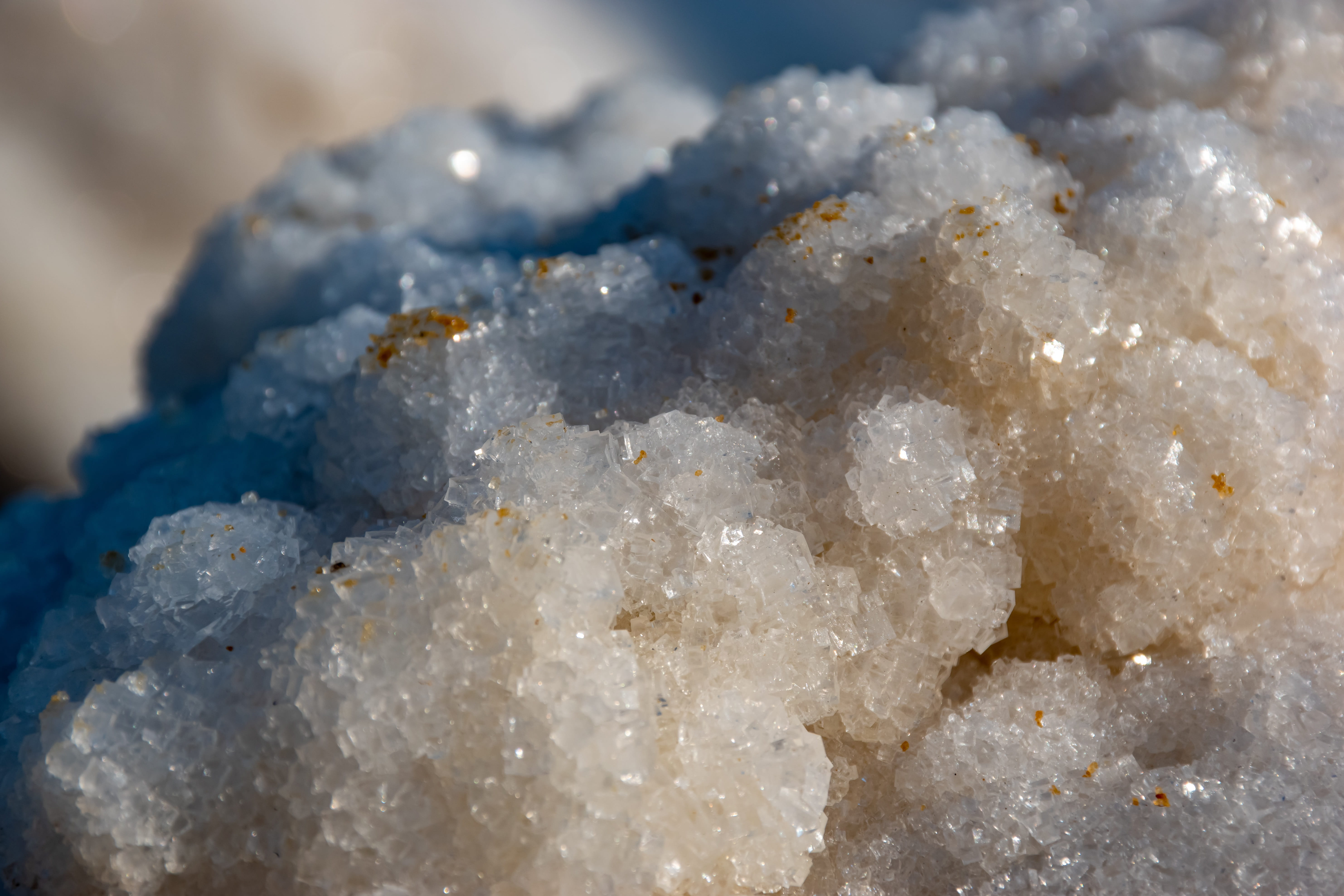
The term “salt of the earth” has found its way from Jesus’ lips to modern English dictionaries. The Merriam-Webster Dictionary defines it as “a very good and honest person or group of people.” The Cambridge Dictionary expands by defining it as “very good, honest, and reasonable, and not thinking you are special in any way.” Although both sound good, neither definition touches on the biblical roots of this term. High moral character is present; however, God is missing from those definitions. As we see throughout the Sermon on the Mount, the high standards Jesus describes for His disciples are unrealistic without God’s help or the presence of the Holy Spirit in our lives.
The Scriptures mention salt on several occasions. The Dead Sea had a high salt content, making it inhabitable. It is at the southern end of the Jordan River, which also passes through the Sea of Galilee to the north. Since the Sea of Galilee has both inflow and outflow, it maintains a healthy saline level, so fish can thrive there. However, the Dead Sea has no outlet; all the salt that flows into it remains there, so fish cannot survive there.
However, salt has beneficial qualities as well. Ancient people used it as an antiseptic, a preservative, or to add flavor to food, among other positive uses. Several ancient religions required salt on sacrifices to their deities. God required this of His people as well:
“Every grain offering of yours, moreover, you shall season with salt, so that the salt of the covenant of your God will not be lacking from your grain offering; with all your offerings you shall offer salt” (Leviticus 2:13).
Its value as a preservative perhaps explains why biblical writers called God’s covenants with the Levites (the priesthood) and the descendants of David (the kings) covenants of salt:
“All the offerings of the holy gifts, which the sons of Israel offer to the Lord, I have given to you and your sons and your daughters with you, as a permanent allotment. It is a permanent covenant of salt before the Lord to you and your descendants with you” (Numbers 18:19).
“Do you not know that the Lord God of Israel gave the rule over Israel forever to David and his sons by a covenant of salt?” (2 Chronicles 13:5).
In both cases, the emphasis seems to be that the covenant is lasting and permanent, just like God’s covenant with the entire nation of Israel.
Every sacrifice was supposed to include salt. They were not to include honey or leaven. Leaven, especially, is in many ways the opposite of salt. While salt preserves, leaven has the opposite effect. For example, it can ferment beverages to create alcohol. Its ability to spread through food or drink to alter its nature is why Scripture sometimes compares leaven to sin, impurity, or corruption. However, salt can slow down this process. If leaven represents sin, salt represents its antidote.
So, by calling His disciples the “salt of the earth,” Jesus challenged them to be the preservative that holds back sin, impurity, or corruption. Instead of participating in the world’s impurity, we should be the influence to draw people to Jesus.

Salt creates thirst. Anybody who has eaten food with too much salt has experienced the thirst that drives them to crave something to drink. Likewise, we should live in a way that inspires a craving for Jesus, a thirst that can be satisfied in no other way.
“Now on the last day, the great day of the feast, Jesus stood and cried out, saying, ‘If anyone is thirsty, let him come to Me and drink. The one who believes in Me, as the Scripture said, “From his innermost being will flow rivers of living water.”’ But this He said in reference to the Spirit, whom those who believed in Him were to receive; for the Spirit was not yet given, because Jesus was not yet glorified” (John 7:37-39).
Surrender to the Holy Spirit so that God’s blessings can flow from Christ, through you, to the people around you. Be a fountain of living water to whom others can come so that they can tap into the true source of living water, Jesus Christ.
Salt must be scattered to be effective. When adding salt to a meal, you either add it early in preparation, so it can spread throughout the food, or you scatter or sprinkle it after the meal has been cooked. You do not drop a tablespoon of salt in the middle of a steak and hope it tastes good; instead, you might use a shaker to apply several grains across the surface of the food.
Let yourself be scattered. Reach out; share your faith with others; serve those in need.
Finally, Jesus warned us that tasteless salt was worthless and likely to be thrown out. In nature, salt cannot lose its saltiness: It might get diluted in water, but it remains salty. Some people suggest that this means it is impossible for a Christian to lose his “saltiness.” However, I do not believe Jesus was interested in spending His time discussing hypothetical circumstances that would never happen. However, the salt of the Dead Sea could point us to two dangers Jesus was hinting at.
First, there is the danger of being a cheap substitute. The Dead Sea has a lot of salt. You can obtain a lot of sodium chloride, the kind of table salt we use on our food, from the bottom of the Dead Sea. However, near its surface, it contains other compounds, including calcium carbonate, which looks like salt but tastes like chalk. Calcium carbonate cannot provide the benefits of sodium chloride.
Then, there is the danger of impurity. In addition to sodium chloride and calcium carbonate, the Dead Sea contains other compounds. Some of them, including hydrogen sulfide (famous for its foul rotten-egg odor) are poisonous. If you have extracted salt from the bed of the Dead Sea or a mine, and it smells like hydrogen sulfide, it does not belong on your food. It belongs in the trash.
Do not let yourself become spiritually impure. Avoid the impure corrupting leaven of the world. Let the Holy Spirit use you as a positive, preserving, purifying influence on those around you. Be the pure salt, not the impure contaminant or cheap flavorless alternative.
Lord God, You called us to be the salt of the earth and the light of the world. Guide us to share Your goodness and light in a dark world so that people may see our good works and look to You for life and purpose. In Jesus’ name. Amen.
How can you be salt to those around you? What are some ways that you can act as a positive influence? Share your thoughts below.
Copyright © 2023 Michael E. Lynch. All rights reserved.
 Darkened Glass Reflections
One response to “Salt of the Earth: Being the Real Thing”
❤️
LikeLike