
“But when the Son of Man comes in His glory, and all the angels with Him, then He will sit on His glorious throne. And all the nations will be gathered before Him; and He will separate them from one another, just as the shepherd separates the sheep from the goats; and He will put the sheep on His right, but the goats on the left.
“Then the King will say to those on His right, ‘Come, you who are blessed of My Father, inherit the kingdom prepared for you from the foundation of the world. For I was hungry, and you gave Me something to eat; I was thirsty, and you gave Me something to drink; I was a stranger, and you invited Me in; naked, and you clothed Me; I was sick, and you visited Me; I was in prison, and you came to Me.’ Then the righteous will answer Him, ‘Lord, when did we see You hungry, and feed You, or thirsty, and give You something to drink? And when did we see You as a stranger, and invite You in, or naked, and clothe You? And when did we see You sick, or in prison, and come to You?’ And the King will answer and say to them, ‘Truly I say to you, to the extent that you did it for one of the least of these brothers or sisters of Mine, you did it for Me.’
“Then He will also say to those on His left, ‘Depart from Me, you accursed people, into the eternal fire which has been prepared for the devil and his angels; for I was hungry, and you gave Me nothing to eat; I was thirsty, and you gave Me nothing to drink; I was a stranger, and you did not invite Me in; naked, and you did not clothe Me; sick, and in prison, and you did not visit Me.’ Then they themselves also will answer, ‘Lord, when did we see You hungry, or thirsty, or as a stranger, or naked, or sick, or in prison, and did not take care of You?’ Then He will answer them, ‘Truly I say to you, to the extent that you did not do it for one of the least of these, you did not do it for Me, either.’ These will go away into eternal punishment, but the righteous into eternal life” (Matthew 25:31-46; all Scripture quotations are from the New American Standard Bible).
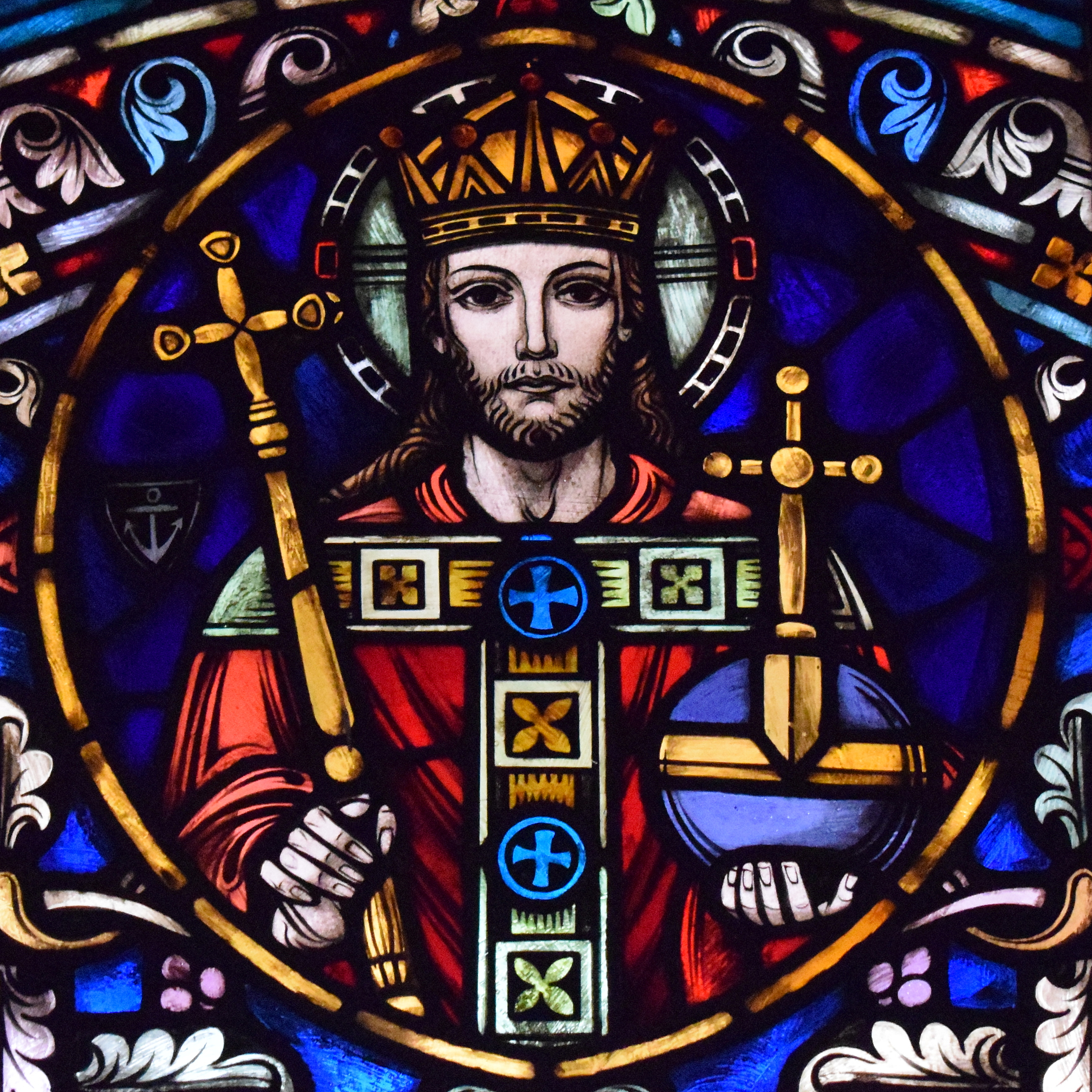
Today is the last Sunday on the liturgical calendar for this year, so many churches celebrate the Feast of Christ the King today. Matthew 25:31-46 touches upon Jesus’ role as King of Kings and Lord of Lords.
He introduces several Messianic titles at the beginning of this parable. Jesus is the Son of Man (v. 31), one of His favorite titles for Himself. He is the King (v. 34). He is the Son of the Father (v. 34). He also sits as Judge of all the nations and guides His people like a shepherd (v. 32). Like His earthly ancestor, King David, Jesus is a Shepherd/King.
How do we know we are part of His kingdom? How do we know that we are part of His flock? As Jesus had said regarding true and false prophets, “You will know them by their fruits” (Matthew 7:16). The fruit of our lives shows whether or not we are part of His flock and kingdom.
Although Jesus is our King and Lord, He feels a genuine connection with the poor, hungry, thirsty, strangers (foreigners), the poorly clothed, the sick, and prisoners. He could have been born into a family of earthly royalty and prestige but instead chose to be born to a teenage mother and her carpenter husband, who probably struggled to make enough money to bring home their daily bread.
How we treat the poor, unfortunate, and forgotten of society says a lot about our faith in Christ. If we love Him, we will love those He came to save. We will do what we can to be a blessing to others.

The sheep in Jesus’ parable gave to others and served them. They did what they could to alleviate others’ suffering. Jesus did not suggest that they looked for loopholes. It did not matter why the hungry could not afford food, where the stranger came from, whether the sick person’s disease was contagious or caused by their bad habits, or if the prisoner was a hardened felon or had gotten a bad rap.
Jesus did not mention if the sheep prayed for these people or not.
However, He had some angry words for the goats. He does not say that the goats did anything to harm the downtrodden. Maybe they did not steal or cause people’s suffering. Jesus did not say if they prayed for these people either; I can almost imagine that the sheep gave first and prayed as an afterthought, while the goats immediately saw people suffering and said, “Oh, how sad! I will add you to my prayer list! Is it OK if I ask my Bible study group to pray for you?” James was probably thinking the same thing when he wrote:
“What use is it, my brothers and sisters, if someone says he has faith, but he has no works? Can that faith save him? If a brother or sister is without clothing and in need of daily food, and one of you says to them, ‘Go in peace, be warmed and be filled,’ yet you do not give them what is necessary for their body, what use is that? In the same way, faith also, if it has no works, is dead, being by itself” (James 2:14-17).
How will we respond to our King? Will we go through religious motions and try to look holy, or will we manifest His love by taking action? Will we be His emissaries, bringing His blessings to others? Will we serve and bless others in His name? Will we be the vessels through whom He brings hope and healing into the lives of others?
Jesus, You are our Lord, Shepherd, Savior, and King. We come to You as Your faithful servants. May we always be ready to say “Yes” to Your will and be the people through Whom You touch others’ lives. Use us to show Your love and mercy to others and thereby invite them into Your kingdom. We ask these things in Your holy name, Lord Jesus Christ, our King of Kings. Amen.
Do you merely pray for the suffering, or do you find tangible ways to help them? How can you do more? Share your thoughts in the comments area below.
Copyright © 2023 Michael E. Lynch. All rights reserved.
 Darkened Glass Reflections