
“Pray, then, in this way:
‘Our Father, who is in heaven,
Hallowed be Your name.
Your kingdom come.
Your will be done,
On earth as it is in heaven.
Give us this day our daily bread.
And forgive us our debts, as we also have forgiven our debtors.
And do not lead us into temptation, but deliver us from evil’” (Matthew 6:9-13; all Scripture quotations are from the New American Standard Bible).
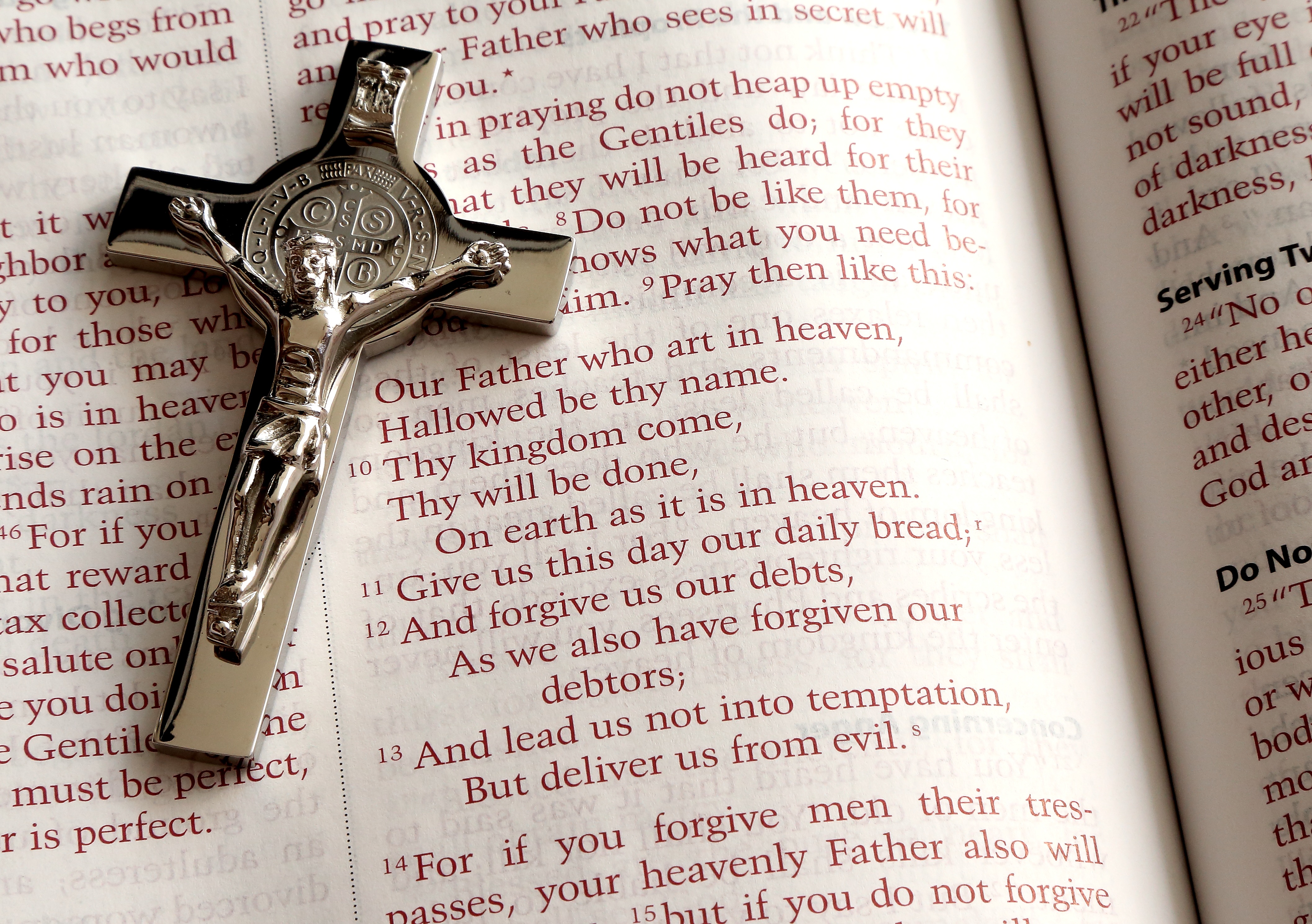
The centerpiece of Jesus’ teaching about prayer is the Lord’s Prayer. It is a concise prayer, memorized by millions of Christians throughout the ages, balancing God’s holiness and kingdom authority with our needs. Both God’s holiness and our needs matter, but we must begin by honoring His holiness. Our prayers will be grounded in God’s power and grace, not in our character or worthiness.
Forthcoming articles in this Sermon on the Mount study will explore each clause or petition. I obtained some insight from Martin Luther’s Small Catechism. He broke the prayer down to the opening address followed by seven petitions (many commentators count six) and a concluding “Amen.”
Most Christians customarily begin the Lord’s Prayer by saying “Our Father, who art in heaven.” We begin by acknowledging who He is. He is our heavenly Father. We approach Him by recognizing His infinite power and authority, as well as His love and mercy.
This implies that we approach Him as His children. We pray out of that relationship. We approach God as a Father who is committed to meeting our needs. We do not have a business connection with God, but a family relationship.
As a result, we can pray boldly and confidently in Jesus’ name.
“Therefore, since we have a great high priest who has passed through the heavens, Jesus the Son of God, let’s hold firmly to our confession. For we do not have a high priest who cannot sympathize with our weaknesses, but One who has been tempted in all things just as we are, yet without sin. Therefore let’s approach the throne of grace with confidence, so that we may receive mercy and find grace for help at the time of our need” (Hebrews 4:14-16).
We pray to a God who loves us and can sympathize with our needs because Jesus became human and endured all the hardships of living. God is not only intellectually aware of our needs. Because Jesus became a man, God knows our needs emotionally as well. He has lived it. When we express our needs, He understands. It means something to Him.
Finally, we should note that Jesus begins this prayer with the phrase “Our Father,” not “My Father.” Even though we may often pray this while we are alone, we cannot live out our faith in Christ in isolation. Many evangelicals abuse and overemphasize the term, “a personal relationship with Jesus Christ,” which never appears in the Bible. The Bible speaks of fellowship with God and one another:
“{W}hat we have seen and heard we proclaim to you also, so that you too may have fellowship with us; and indeed our fellowship is with the Father, and with His Son Jesus Christ…. If we say that we have fellowship with Him and yet walk in the darkness, we lie and do not practice the truth; but if we walk in the Light as He Himself is in the Light, we have fellowship with one another, and the blood of Jesus His Son cleanses us from all sin” (1 John 1:3, 6-7).
It is more accurate to say that we have a familial relationship with Jesus Christ, with God as our Father and fellow believers as our siblings. We pray not as spiritual “lone rangers,” but as children of God and members of His family. The strength and success of our prayers do not come from our personal piety or goodness but from the grace, power, and love of the heavenly Father who has drawn all who trust Jesus for salvation into His family.
Heavenly Father, thank You for the assurance that we can come to You at any time with our needs. Teach us how to pray to You and give You the worship and honor You deserve. In Jesus’ name. Amen.
What does God’s status as Father and your position as His child mean to you? Share your thoughts in the comments section below.
Copyright © 2024 Michael E. Lynch. All rights reserved.
 Darkened Glass Reflections