
“Everyone then who hears these words of mine and does them will be like a wise man who built his house on the rock. And the rain fell, and the floods came, and the winds blew and beat on that house, but it did not fall, because it had been founded on the rock. And everyone who hears these words of mine and does not do them will be like a foolish man who built his house on the sand. And the rain fell, and the floods came, and the winds blew and beat against that house, and it fell, and great was the fall of it” (Matthew 7:24-27; all Scripture quotations are from the English Standard Version).
As Jesus ended His Sermon on the Mount, He returned to carpenter lingo. Earlier, He had used building terminology in Matthew 5:17-20, when He said He came to fulfill (bring to completion) the Law, not to abolish (demolish) it like a condemned building.
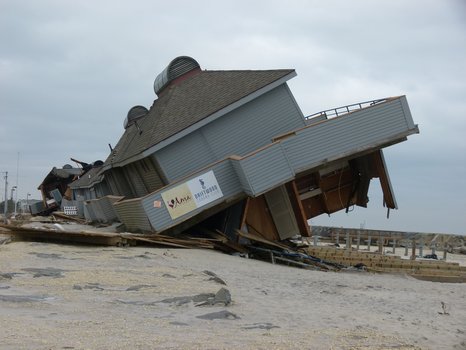
Every house needs a firm foundation. That will determine how well the house resists storms. Houses with a firm foundation and strong structure are more likely to survive a hurricane than a poorly built one with a weak foundation. When Hurricane Sandy struck Long Island in 2012, several families lost their homes when they were shaken from their foundations. Occasionally, beachfront houses crash into the sea because they are built on sand or another weak foundation. A poor location and weak foundation can lead to certain destruction.
Our lives need a firm foundation, which is the Word of God. In Matthew 7:24-27, Jesus contrasted two groups of people by comparing them to two kinds of houses. The wise man—representing the disciple who follows Christ—built his house on a rocky area, with a sturdy foundation. He probably had to work harder to complete his home, but when storms came, the house survived.
On the other hand, the fool—the person who rejects God’s wisdom—built his house on sand. He probably finished it faster than the wise man, but it lacked a firm foundation. When a storm struck, his house was gone.
Both had built a house. Maybe they used the same design, but the foundation determined which house could stand.

In this parable, Jesus said that both men had heard His words. Perhaps they attend the same church. They might both read the Bible diligently, take notes during the pastor’s sermon, and read Christian literature. However, even though they have the same building materials for their lives (God’s Word), they build on different foundations.
The foundations are obedience or disobedience, action or inaction, diligence or apathy. When you hear God’s Word, do you act on it? When you know what God commands, do you obey, make excuses, or ignore Him? Do you truly live by God’s Word, or do you only believe without acting on it?
According to the New Testament, a fool is someone who claims to be a believer, hears or reads God’s Word, perhaps even claims to believe it, but does not act on it.
“But be doers of the word, and not hearers only, deceiving yourselves. For if anyone is a hearer of the word and not a doer, he is like a man who looks intently at his natural face in a mirror. For he looks at himself and goes away and at once forgets what he was like. But the one who looks into the perfect law, the law of liberty, and perseveres, being no hearer who forgets but a doer who acts, he will be blessed in his doing” (James 1:22-25).
Let us seek wisdom by learning, understanding, and obeying God’s Word. Then, we can trust Him to keep our lives from crashing to destruction when the storms of life flood our circumstances and blow against us. By building and standing on His foundation, we will stand.
Lord God, thank You for Your Word. Thank You for loving and guiding us so that we can withstand the storms of life. Direct our hearts so that we may be doers of Your Word, and not hearers only, devoted to obeying You when we hear Your truth. In Jesus’ name. Amen.
How do you find ways to apply the truths of God’s Word in your life? Share your thoughts in the comments area below.
Copyright © 2024 Michael E. Lynch. All rights reserved.
 Darkened Glass Reflections