
“And he entered the temple and began to drive out those who sold, saying to them, ‘It is written, “My house shall be a house of prayer,” but you have made it a den of robbers.’ And he was teaching daily in the temple. The chief priests and the scribes and the principal men of the people were seeking to destroy him, but they did not find anything they could do, for all the people were hanging on his words” (Luke 19:45-48, English Standard Version).
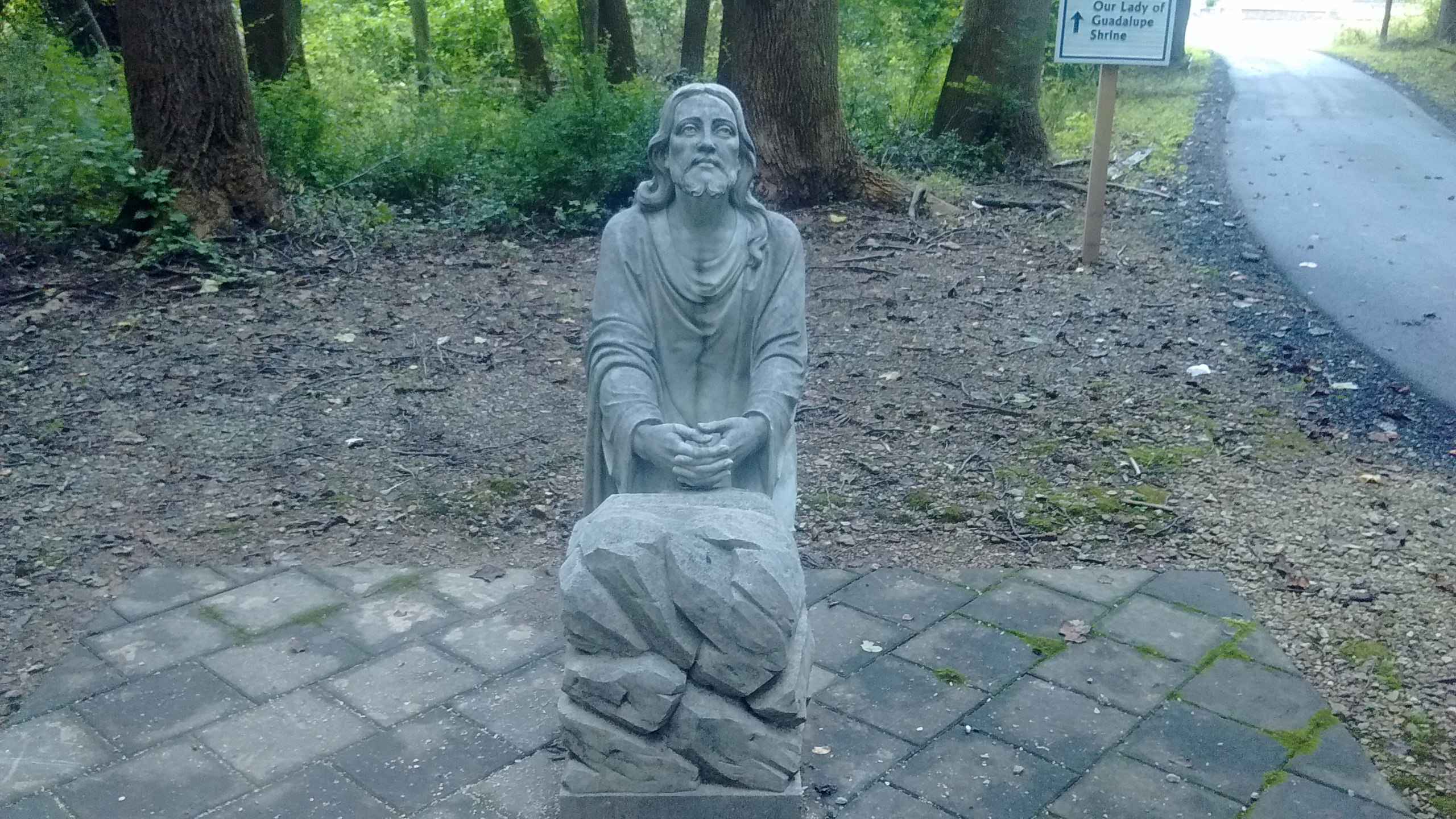
As I sat down to write this post, I received a notification from WordPress that a recent article from this site had received a “pingback,” where another blog cited it and provided a link.
According to its “tagline,” the blog’s author, Laura, writes “for victims of spiritual and physical abuse in the Roman Catholic Church,” which is not a topic I rarely address. I was raised Roman Catholic but essentially walked away from the faith before I became a teenager. I briefly returned to Catholicism when I was in 12th grade, before returning to New Age thinking and then becoming a born-again Christian after my first year of college. So, for years, I would describe my faith by quoting George Carlin: “I used to be Irish Catholic; now I’m an American.” In time, my walk with Jesus Christ led me into what I considered “Christianity in a blender” faith, embracing elements from different branches of Christianity until I joined a Charismatic Episcopal Church which adopts elements of the sacramental/liturgical, evangelical, and charismatic branches of Christianity (our communion calls its worship “convergent,” which sounds more spiritual than “Christianity in a blender”).
Laura seems passionate and has apparently been deeply hurt by people within the Church. On the surface, our experiences seem to be very different, although Catholic school teachers and nuns probably turned me away from Catholicism more than priests did.
However, she brought my attention to an aspect of the above Bible passage that we should consider when we think about Jesus clearing the temple: It rebukes a religious establishment that becomes a barrier between people and God instead of a bridge between them. This story is recounted, with some variations, in all four Gospels. Matthew, Mark, and Luke said it happened shortly after the triumphal entry into Jerusalem, less than a week before the crucifixion. John places it early in Jesus’ ministry (John 2:14-16); he is also the only Gospel writer who describes Jesus making a “whip of cords.” These two differences lead some Bible scholars to think Jesus actually cleared the temple twice. Whether He did or not, the fact that this occurs in all four Gospels tells us it is significant. The Holy Spirit wants us to listen.
Throughout the Gospels, ordinary people eagerly followed Jesus. This included the poor, the working classes (who would have been considered poor by our standards, surviving day-to-day), the sick, and the marginalized—especially tax collectors and other notorious sinners. The religious leaders, on the other hand, saw Him as a threat to the establishment who must be silenced.
The church should be a house of prayer. Its activities should center around prayer, praise, worship, and equipping the saints for works of ministry (Ephesians 4:12). Nothing should distract a church from this focus. Money can be a major distraction. So can popularity, as when a church compromises the Bible’s teaching, relies on secular marketing and business strategies, or turns the music ministry into a rock concert to draw more attendees. The lust for power can also lure a pastor, church, or ministry away from its proper mission.
The church should also be a place of acceptance and healing. The moneychangers in the temple were doing their work in the court of the Gentiles, the only part of the temple that non-Jewish worshipers were allowed to enter. Not only were they told, “You are not allowed to get as close to God as we are. You’re not good enough.” Now they were told, “Your prayers don’t matter. It’s OK if we create endless distractions and obstacles to your worship. God doesn’t care about you.”
I have attended many churches since I became a disciple of Jesus in 1984. In some of them, it was obvious that some people were not welcome. Everybody might have been the same color. There might be an obvious dress code that showed that people from the “wrong side of the tracks” were not welcome or would be viewed as second-class members if they attended. Some churches scared off seekers with their rules and regulations.
Are our churches committed to sharing the love of God and the good news of salvation through Jesus Christ with a sin-psychotic world, or are they committed to supporting their establishment or becoming part of the world’s establishment? Such misguided churches can easily slip into spiritual abuse (or, in some cases, even physical or sexual abuse) or might turn people away from the Lord in other ways.
As individual believers, are we committed to following Jesus and obeying His two greatest commandments (love God and love your neighbor; see Matthew 22:36-40) or would we prefer to maintain a status quo that aligns us with the kingdoms of this world instead of the Kingdom of God?
On Palm Sunday, the people in Jerusalem greeted Jesus as their Messiah, shouting, “Blessed is the King who comes in the name of the Lord! Peace in heaven and glory in the highest!” (Luke 19:38). Less than a week later, cries of “Crucify, crucify him!” (Luke 23:21) erased that praise. Those who seek their own power and prestige will find ways to silence the King of Kings. Those who sincerely seek to follow and praise Him will receive healing and new life; then, they can offer healing and new life to those around them.
Almighty and everliving God, in your tender love for the human race you sent your Son our Savior Jesus Christ to take upon him our nature, and to suffer death upon the cross, giving us the example of his great humility: Mercifully grant that we may walk in the way of his suffering, and also share in his resurrection; through Jesus Christ our Lord, who lives and reigns with you and the Holy Spirit, one God, forever and ever. Amen (from The Book of Common Prayer).
Please share your thoughts about this post in the comments area below.
Copyright © 2024 Michael E. Lynch. All rights reserved.


One response to “Jesus Cleansed the Temple: We Still Need Cleansing”
This is why teachers of the gospel will receive a stricter judgment (James 3:1). It can even boil down to smaller things like the doctrines we teach and our willingness to be led by the Spirit. Every church leader must carefully and prayerfully seek God daily in how they lead their ministry. But praise God, if someone is faithful in doing so, they will receive a great reward.
LikeLike