“But you will receive power when the Holy Spirit has come upon you, and you will be my witnesses in Jerusalem and in all Judea and Samaria, and to the end of the earth” (Acts 1:8; all Scripture quotations are from the English Standard Version).
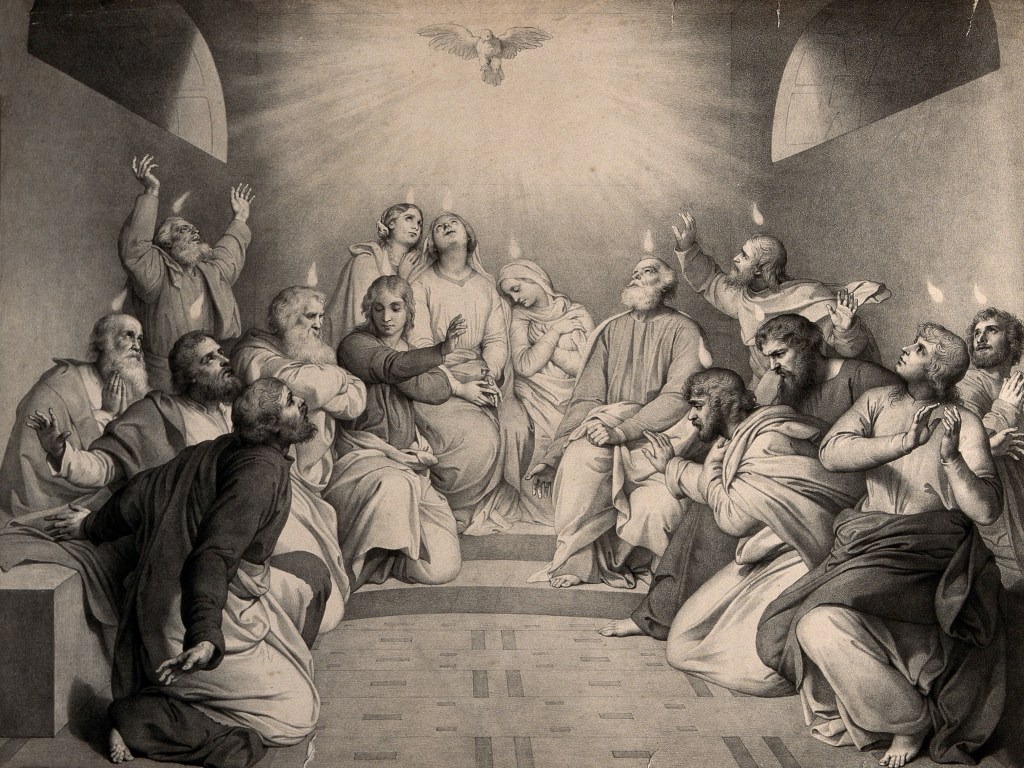
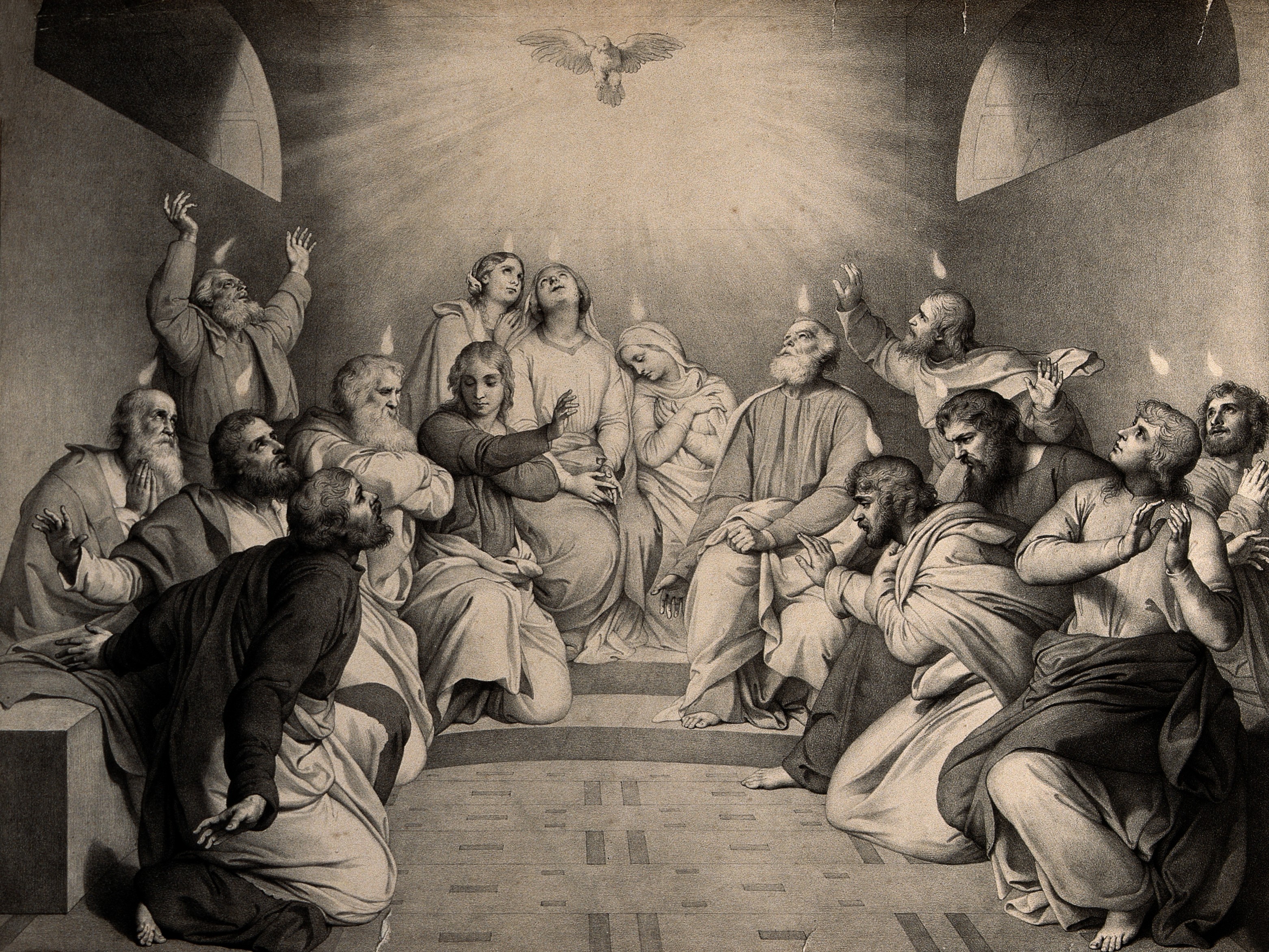
“When the day of Pentecost arrived, they were all together in one place. And suddenly there came from heaven a sound like a mighty rushing wind, and it filled the entire house where they were sitting. And divided tongues as of fire appeared to them and rested on each one of them. And they were all filled with the Holy Spirit and began to speak in other tongues as the Spirit gave them utterance…. So those who received his word were baptized, and there were added that day about three thousand souls” (Acts 2:1-4, 41).
Jesus reminded His disciples several times that they would receive the Holy Spirit after He ascended. This was a key point of His instruction to them on the night He was betrayed (see John 14-17) and in His post-resurrection appearances.
I wonder if the apostles spent those days wondering, “How will we know when we received the Holy Spirit?” Jesus made it sound like they would know but did not spell out the details. “Wait for the promise of the Father” (Acts 1:4), then “go.” At no point did He say, “You will know that you received the Holy Spirit when….”
However, when it happened, they knew: a sound like a mighty rushing wind; tongues of fire resting on each of them; and then, their own tongues “caught fire” and they spoke in other languages, “as the Spirit gave them utterance” (Acts 2:4). Jesus had mentioned none of these phenomena. The Bible never tells us that Jesus ever miraculously spoke in an unlearned language. (He probably spoke several languages—Hebrew, Aramaic, Greek, and Latin—being a Jewish carpenter who grew up in Nazareth, not far from a Roman army garrison, but that is not the same as what happened to the disciples on Pentecost.)
Something new had happened to and through them. It was supernatural. God was glorified. This had to be it. Many Christians refer to Pentecost as “the birthday of the Church,” because on that date the disciples received the Holy Spirit and 3000 new converts placed their faith in Jesus and accepted baptism.
With this in mind, let us consider the prerequisites and purpose of Pentecostal power.
First, consider the prerequisites. The people who received the Holy Spirit were already disciples. Some had followed Jesus for three years, hanging on every word He said. Acts 2:1 tells us that they were united; the New King James Version says “they were all with one accord in one place.” While Christians call it Pentecost (Greek for “50 days,” signifying the 50th day since Jesus rose from the dead), Jews call it Shavuoth, “the feast of weeks,” the 50th day after Passover and the escape from Egypt. On that day, God gave the Law to Moses. Many Jews observe Shavuoth by staying up all night studying the Law. Perhaps this is what the disciples were doing: they had been awake, studying the Law, perhaps discussing how it related to Jesus’ teaching. “When the Day of Pentecost had fully come” (Acts 2:1, NKJV), i.e., some time after daybreak, their hearts were ready; they were united in faith and purpose. God was ready to pour out His Spirit.
In our modern individualistic culture, many Christians seem to think of the Third Person of the Trinity as “my Holy Spirit.” These are my spiritual gifts; this is my anointing; it is all about my relationship with Jesus. This self-focused mentality goes against the life of corporate worship and mutual accountability taught in the Bible. The Holy Spirit fills us so that we can operate as members of the body of Christ (1 Corinthians 12:12-19). Your right foot does not try to walk without the assistance of the rest of the body; neither should any Christian try to “walk in the Holy Spirit” without connection with the body of Christ. He calls us to unity.
Next, we need to look at the purpose. Many churches (including mine) believe the blessing of Pentecost is still available today. God did not retire and stop healing or performing miracles. He is still working mightily in people’s lives.
However, some churches misuse the gift. They think that the Holy Spirit is present when the music is loud, people get excited, and when they have a really cool fog machine to make the “song service” look like a rock concert. To them, the Holy Spirit’s function is to make people feel good. (This does not describe all Pentecostal and Charismatic churches, but this is a common problem.)
The Holy Spirit is in our lives to bear fruit, not to bolster feelings. Whenever Jesus mentioned the Holy Spirit to the disciples, He spoke about evangelism: preach repentance for the forgiveness of sins (Luke 24:47); make disciples; baptize them in the name of the Father, Son, and Holy Spirit; teach them to follow all that He taught them. Do this everywhere, even to all nations. Do this until the end of the age (Matthew 28:16-20).
He did not mention a flashing strobe light, laser show, killer bass-guitar riff, dancing, etc. The purpose of the Holy Spirit is to empower us to spread the Gospel. The Spirit fills us so that we can serve others (Romans 12:6-8; 1 Corinthians 12:4-31) for the common good, the growth of the church, and share the Good News. The Holy Spirit is not there to make us feel good; He is there to empower us to serve as Christ’s representatives.
We receive the Holy Spirit by faith as Jesus’ disciples. He calls us to walk in unity with other believers. He empowers us to serve Him and others as we spread the Gospel to all nations. This is the purpose of Pentecostal power. How will you seek the Holy Spirit’s presence and power in your life?
O God, who on this day taught the hearts of your faithful people by sending to them the light of your Holy Spirit: Grant us by the same Spirit to have a right judgment in all things, and evermore to rejoice in his holy comfort; through Jesus Christ your Son our Lord, who lives and reigns with you, in the unity of the Holy Spirit, one God, for ever and ever. Amen (Book of Common Prayer).
Copyright © 2025 Michael E. Lynch. All rights reserved.
 Darkened Glass Reflections
One response to “Prerequisites and Purpose of Pentecostal Power”
Amen and amen, I always say what is not from God fades with time and the pure gospel remains. Amen to this teaching 🙏 🙌
LikeLiked by 1 person