
I dedicate this article to my aunt Isabella “Liz” Barry, who went home to be with the Lord on August 31, 2025. Aunt Liz was a wonderful source of wisdom, guidance, and encouragement early in my walk with Christ. I am eternally grateful for her presence and support when I was young in the Lord.
“First of all, then, I urge that supplications, prayers, intercessions, and thanksgivings be made for all people, for kings and all who are in high positions, that we may lead a peaceful and quiet life, godly and dignified in every way. This is good, and it is pleasing in the sight of God our Savior, who desires all people to be saved and to come to the knowledge of the truth. For there is one God, and there is one mediator between God and men, the man Christ Jesus, who gave himself as a ransom for all, which is the testimony given at the proper time” (1 Timothy 2:1-6; all Scripture quotations are from the English Standard Version).
Many people think that supplications (requests for our own needs) and intercessions (requests for others) are the center of prayer. Early in my Christian walk, they probably made up 90% of my prayer time. Daily devotions consisted of reading three chapters of Scripture and then rambling off my “shopping list” to God. Most of that shopping list was for things I wanted, but over time, other people’s needs took up more of that list.
Today, I spend more time praying for others than for my needs and desires. One area where I admit I can improve is in the area of giving thanks. St. Paul wrote that we should offer supplications, prayers, intercessions, and thanksgivings. Giving thanks is an important part of prayer; it goes hand-in-hand with intercession and supplication. We offer our prayers to God. He answers the prayer; we should remember to thank Him. Even if we have not seen a prayer request fully answered, we can offer thanks. For example, when praying for a friend who is looking for a new job, we can thank God when they see an opportunity or get a job interview.
Who should we pray for? It is easy to pray for close friends, family, and other people with whom we have a good relationship. What about others? What about the co-worker whom you cannot stand? What about the annoying neighbor? What about the politician who stands for everything you oppose?
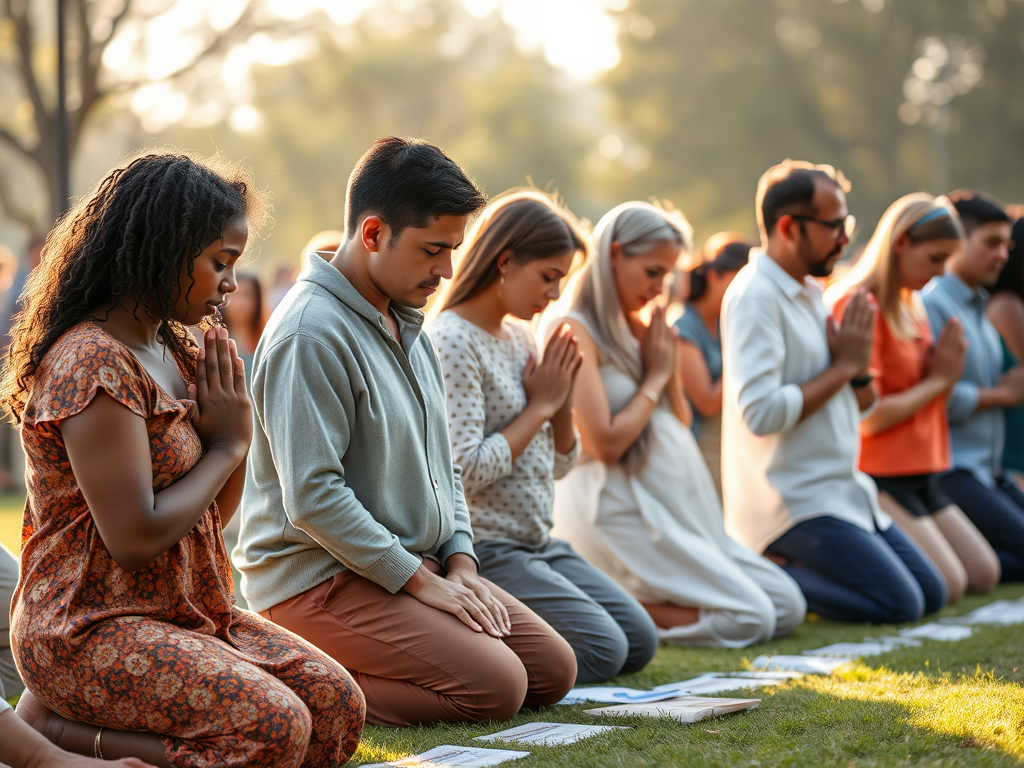
We should definitely pray for people we find hard to love. Paul wrote that we should pray for “all people.” Then, he mentioned “kings and all who are in high positions.” These were not Christian politicians who were seeking to promote godly values in government. In Paul’s second letter to Timothy, he wrote, “I am already being poured out as a drink offering, and the time of my departure has come” (2 Timothy 4:6). In other words, kings and people in high positions were preparing to execute him. First-century politicians did not merely pass laws that contradict Christian values and church teaching; they tried to eradicate the faith. Jesus taught, “But I say to you, Love your enemies and pray for those who persecute you” (Matthew 5:44). If Jesus expects us to pray for those who are intentionally and maliciously attacking us, we should also pray for the people who merely annoy us.
When praying for public figures, we should pray the following:
- 1 Timothy 2:2 says we should pray for public officials so that “we may lead a peaceful and quiet life, godly and dignified in every way.”
- We should pray that God would move leaders’ hearts so the Gospel may go forth and the church can minister unhindered.
- Likewise, we should pray that the government respects the church’s freedom to be the church, not that it does the church’s job. Often, we expect the government to pass laws that will do things that Christians and congregations, as the body of Christ, are supposed to do. While we should support politicians who share our values, we should not expect them to do what only God can do. Government can provide an environment where righteous and noble people and institutions, including the church, can operate at liberty; it cannot and should not become a postmodern messiah to save the land.
Bible commentator Warren W. Wiersbe wrote, “What is the most vital ministry of the local church? According to Paul, it is prayer. Prayer moves the hand that governs the world. We must pray for government leaders, that the doors of ministry will be kept open and souls will be won for Christ. Because God’s people do not pray for people in authority, wars close mission fields, officials do not grant needed visas, and the work of the Lord suffers.”i
Pray without ceasing. Expect God to act in response to your prayers, and to change the hearts and circumstances of those you love, those whom you have trouble loving, and those whose decisions change our world.
iWarren W. Wiersbe, Chapter-by-Chapter Bible Commentary (Nashville, TN: Thomas Nelson Publishers, 1991), p. 797
Who are you praying for? Are you more likely to criticize people or ask God to work in their hearts and lives?
Copyright © 2025 Michael E. Lynch. All rights reserved.
 Darkened Glass Reflections
One response to “Prayer, Intercession, and Changing the World”
I am sorry about aunt Liz. I agree in our early walk with Christ it’s all about us but as we grow we begin to think about and pray about other and grow to pray for our enemies. We grow, thank you
LikeLiked by 1 person