
The following is the second part of a series based on a sermon I delivered in a Hermeneutics and Homiletics class at the CEC Northeast Diocese Seminary on April 18, 2026. You can read Part 1 here.
“And in his teaching he said, ‘Beware of the scribes, who like to walk around in long robes and like greetings in the marketplaces and have the best seats in the synagogues and the places of honor at feasts, who devour widows’ houses and for a pretense make long prayers. They will receive the greater condemnation.’
And he sat down opposite the treasury and watched the people putting money into the offering box. Many rich people put in large sums. And a poor widow came and put in two small copper coins, which make a penny. And he called his disciples to him and said to them, ‘Truly, I say to you, this poor widow has put in more than all those who are contributing to the offering box. For they all contributed out of their abundance, but she out of her poverty has put in everything she had, all she had to live on’” (Mark 12:38-44; all Scripture quotations are from the English Standard Version).
Often, Jesus’ teachings and parables seem to focus on extremes. We see here the really rich, selfish scribe contrasted with the poverty-stricken widow. Most of us live “in the middle,” somewhere between these two extremes. In our day, we can associate these people with certain stereotypes or social classes in our society. We can imagine the super-rich guy who takes advantage of the poor, underpays his employees, and hypocritically pretends to be righteous or religious. There might be a hospital pavilion or theological seminary building named after him because of his generous donation (probably what he received as an income-tax refund one year). On the other hand, we can picture the poor, downtrodden, or oppressed who have no hope but to trust God for their daily bread.
Most of us, though, are somewhere in the middle. I don’t think any of us in this room today are particularly rich. But, none of us look homeless or starving. Some of us look like we should go on a fast! I bet most or all of us give some kind of offerings. Some of us might even tithe. But, we still have money for food, utility bills, rent or mortgage, and other expenses after giving our tithes and/or offerings. We probably have extra money for luxuries and other “fun” stuff. Maybe we don’t oppress the poor, but do we actively intentionally do anything to help them? We might not be really arrogant—we don’t have this neurotic urge to shake things up and make people notice us—but we’re still influenced to some extent by pride or a desire for self-preservation and self-reliance. We live in the middle: We’re not really like the scribe in this story, but we’re not like the widow either.
While Jesus spoke of the extremes, His message applies to all of us. Even the rich can follow Jesus’ teachings. One great example is given by the life of John Wesley, the founder of Methodism. He was an 18th century evangelist and pastor who radically devoted himself to a holy life. When he was in his late 20s, he decided to limit his spending so that he would have more money to give to the poor. Even as his income grew, he could continue to live frugally, rarely increasing spending on his own needs and desires. At one point, he earned about 1400 British pounds in a year (equivalent to approximately half a million American dollars today), but spent only about 30 pounds on himself and his family.
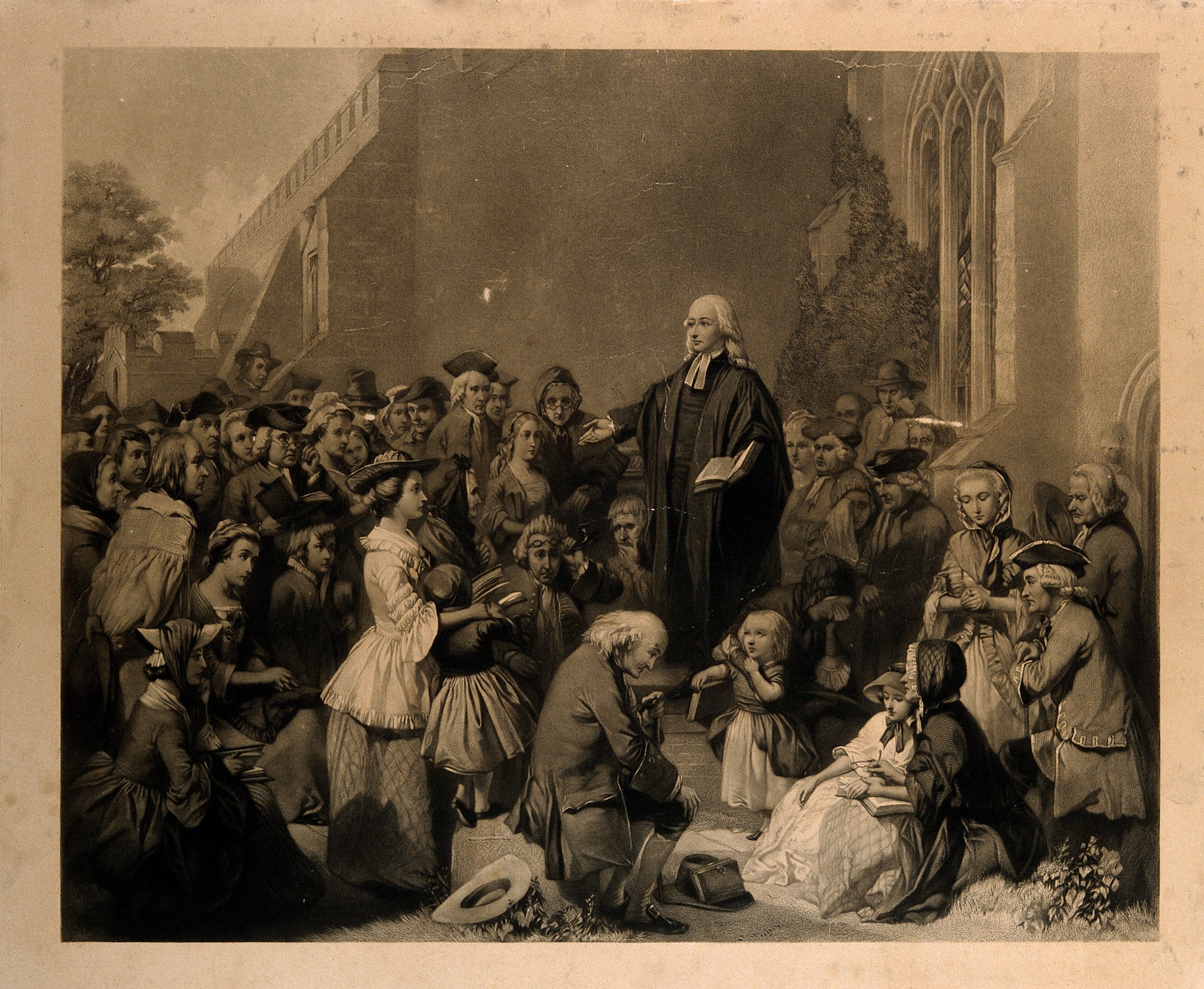
“When he died in 1791 at the age of 87, the only money mentioned in his will was the coins to be found in his pockets and dresser. Most of the 30,000 pounds he had earned in his life had been given away. He wrote, ‘I cannot help leaving my books behind me whenever God calls me hence; but in every other respect, my own hands will be my executors. In other words, I will put a control on my spending myself, and I will go beyond the tithe for the sake of Christ and his kingdom’” (Quotes from Mission Frontiers, Sept./Oct. 1994, nos. 9–10, pp. 23–24.) (See “John Wesley’s Generosity for the Sake of the Kingdom.”)
That 30,000 pounds was equivalent to about $10 million today.
Wesley would frequently receive a large amount of money through his publishing endeavors. His books were bestsellers and his magazine, The Arminian (named after Jacob Arminius, a theologian whose beliefs shaped Wesley’s teaching), sold numerous copies. He could have died a very wealthy man, but instead chose to use his money to help others. How much money he made mattered less than what he did with it.
Jesus is still speaking to us. “Be that widow, or at least, be like her. Come to me as she came to My house,” says the Lord.
Live faithfully. Trust God. Expect that He will take care of you. Live knowing that you need Him, not acting like you can do something to help Him.
Give generously, even extravagantly or sacrificially. Please, don’t take greedily.
Do not allow disappointment, resentment, and the hypocrisy, apathy, or greed of others to keep you from living a life of radical faithfulness.
So, as we think about the widow and the scribes, let us examine ourselves. Are our worship, giving, service, and daily life sacrificial and extravagant? Or do we worship, give, serve, and obey only as long as it is convenient or comfortable? It is easy to think, “I gave my tithe; the rest of the money is mine to do whatever I want with it.” Or, “I prayed this morning and went to church on Sunday. The rest of my time is mine.” Is that the committed life to which Jesus calls His disciples?
The widow gave “her whole life.” Are you giving God your whole life, or just a part of it? If you are not giving your whole life, what are you holding back? Who or what is holding you back?
Copyright © 2026 Michael E. Lynch. All rights reserved.


One response to “The Widow’s Mite: Breaking Away from the Middle (Mark 12:38-44)”
[…] This is the first part of the sermon. Part 2 appears here. […]
LikeLike