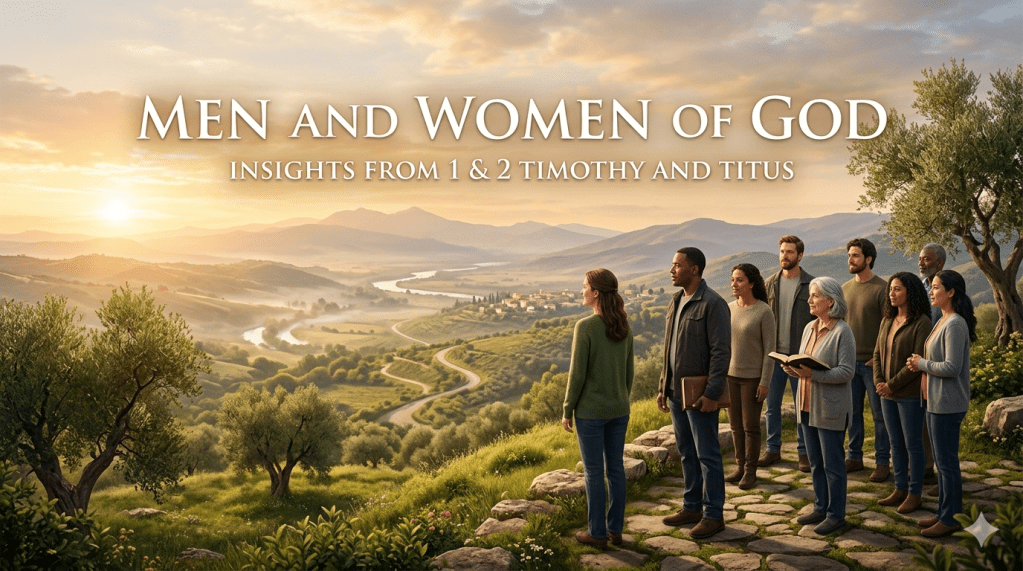
“Paul, an apostle of Christ Jesus by command of God our Savior and of Christ Jesus our hope, To Timothy, my true child in the faith: Grace, mercy, and peace from God the Father and Christ Jesus our Lord” (1 Timothy 1:1-2; all Scripture quotations are from the English Standard Version).
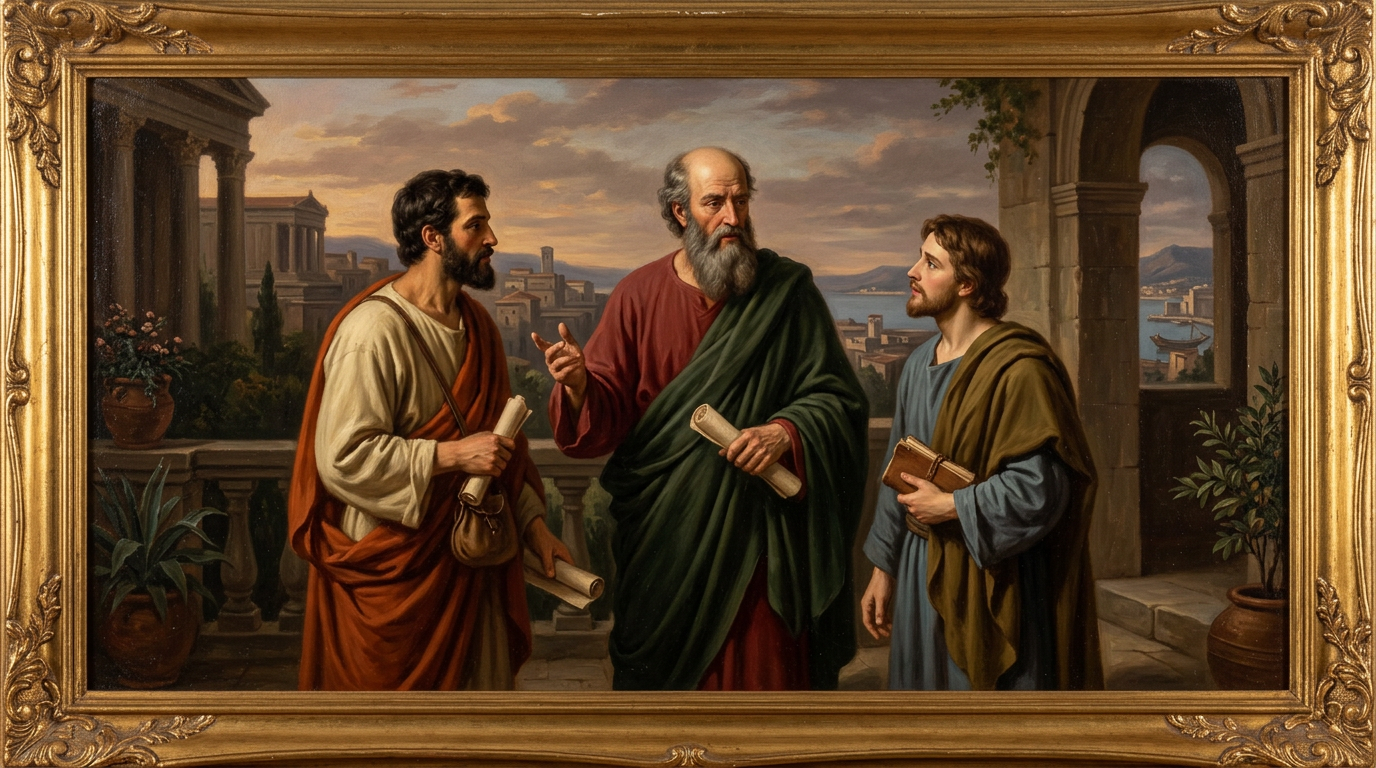
This article introduces a series on the New Testament’s three pastoral epistles. Over the next few months, we will delve deeply into Paul’s first and second letters to Timothy and to Titus. These letters were probably the last three that he wrote while imprisoned in Rome. First Timothy and Titus were probably written around 64 AD; Second Timothy was probably written around 67 AD, shortly before Paul was executed. (Second Timothy 4:6-8, among other passages in that letter, show that Paul expected to be “going home to be with Christ” very soon.) In these letters, Paul has dispatched his young proteges to appoint leaders and set matters in order throughout the churches in Asia Minor and Crete.
Well, if these letters are about the roles of church leaders and the order of local churches, why should ordinary Christians care? First, many of Paul’s instructions tell Timothy and Titus what they should teach to different groups of people within the churches. Second, the qualifications for ministry are qualities all Christians should seek. As historian R. W. Southern wrote, summarizing early church leader Gregory the Great’s (540-604) description of a bishop, “In a word, the character of a bishop was simply that of a Christian writ large.”i
Early in my Christian walk, someone gave me a book entitled The Measure of a Man,ii which looked at Paul’s instructions in these three books and applied them to the lives of Christian men in general. However, the pastoral epistles are not for men only. Paul gives instructions regarding deaconesses, widows, and other women, and most godly traits apply to both men and women. All Christians—men and women, young and old, church leaders or laymen—should seek the Christlike attributes described in the pastoral epistles.
Furthermore, all Christians are in full-time ministry. While not all Christians are prophets, evangelists, pastors, or teachers, all are called to share the Gospel, teach others about Christ, and serve His Church and other people. Even if you do not hold an official title in the church or belong to the “fivefold ministry” (Ephesians 4:11-14), you are called to use your spiritual gifts and share the good news about Jesus through your words and actions.
I would like to close this article by addressing a few issues of terminology. First, there is the question of Paul’s greetings at the beginning of these letters. Throughout his other letters, Paul opens with the greeting, “Grace to you and peace from God our Father and the Lord Jesus Christ” (e.g., 1 Corinthians 1:3) or some variation on that. When greeting Timothy, though, he adds a blessing: grace, mercy, and peace. Some scholars say that this is proof that Paul did not actually write these letters; I would suggest that it indicates a special bond between Paul and Timothy.
Second, Paul speaks of “trustworthy sayings” throughout these letters. For example, in 1 Timothy 1:15, he introduces a thought, “The saying is trustworthy and deserving of full acceptance….” Again, this is unique to the pastoral letters, but probably related to the fact that Paul is writing to church leaders instead of congregations at large. Pay careful attention to whatever follows this phrase in the pastoral epistles; Paul is highlighting something we need to remember.
Finally, it is helpful to address some of the ministry terminology that appears in the pastoral epistles. Although clergy roles may have taken a more clearly defined shape later on, we see the emergence of certain terms in the New Testament. At times, Paul speaks of “deacons.” This comes from a Greek word, “diakonos,” which is a rather general term for a servant. It often referred to a household servant, or a waiter or waitress. When we see this term, we should think of someone in a role of humble servanthood, attending to the needs of others. Most churches have some ministries or positions that they call “deacons.” People who hold this title should honestly and sincerely remember their call to humble servanthood of others.
In the English Standard Version of Paul’s writings, we will also encounter the term “overseers.” The Greek word here is “episkopos,” from which we get our English title “bishop.” I will use both terms “overseer” and “bishop” interchangeably.
Finally, there is the term “elder.” The Greek word here is “presbyteros,” which is the root of our English word “priest.” By the early second century, there was a clearly-defined order: a deacon was below an elder or priest, who was below a bishop or overseer. Again, I will use the titles “elder” or “priest” interchangeably, depending on the context.
Some readers may question the validity of the term “priest” in a New Testament Christian context. Isn’t Jesus our great High Priest? Isn’t He our only priest? Didn’t the Old Testament priesthood become obsolete when He died on the cross? These questions can probably be explained by clarifying two Greek terms.
When speaking of the Old Testament priesthood, Christ’s eternal priesthood, pagan priests, or even the priesthood of all believers (see Revelation 1:6 and 1 Peter 2:9), a different Greek word is used: hiereus. We are speaking of two different kinds of priesthood. All Christians are hiereis, priests who are called to act as intermediaries between God and the world. Some are called to be elder-priests over the priesthood of believers, “to equip the saints for the work of ministry, for building up the body of Christ” (Ephesians 4:12). Those who desire to completely fulfill their roles in the priesthood of all believers would be wise to pursue the qualities Paul describes for the elder-priests in these letters.
I started my current study of these letters as part of a course on Pastoral Care, considering the prerequisites and responsibilities of a pastor within a local church. I pray that, as we study these letters over the next few months, we may be challenged to grow spiritually, so that we may faithfully represent Christ and serve those for whom He died.
i R. W. Southern, Western Society and the Church in the Middle Ages (London: Penguin Books, 1970), p. 172.
ii Gene A. Getz, The Measure of a Man: Twenty Attributes of a Godly Man, rev. ed. (Ventura, CA: Regal Books, 2004).
Read the next article in this series.


7 responses to “Men and Women of God. I: An Introduction to the Pastoral Epistles”
[…] Part 1 of this series. […]
LikeLike
[…] Part 1 of this series. […]
LikeLike
[…] Part 1 of this series. […]
LikeLike
[…] Part 1 of this series. […]
LikeLike
[…] Part 1 of this series. […]
LikeLike
[…] Part 1 of this series. […]
LikeLike
[…] Part 1 of this series. […]
LikeLike