“The saying is trustworthy: If anyone aspires to the office of overseer, he desires a noble task. Therefore an overseer must be above reproach, the husband of one wife, sober-minded, self-controlled, respectable, hospitable, able to teach, not a drunkard, not violent but gentle, not quarrelsome, not a lover of money. He must manage his own household well, with all dignity keeping his children submissive, for if someone does not know how to manage his own household, how will he care for God’s church?He must not be a recent convert, or he may become puffed up with conceit and fall into the condemnation of the devil. Moreover, he must be well thought of by outsiders, so that he may not fall into disgrace, into a snare of the devil” (1 Timothy 3:1-7; all Scripture quotations are from the English Standard Version).
During my study, I treated 1 Timothy 3:1-13 as a single passage. It might be a little long to cover in a single blog post, which I generally try to keep below 1,000 words. Also, there were several key topics worth covering in this passage. We can look at the ministry roles and titles mentioned here, and we can analyze the qualifications discussed. Since the qualifications of an overseer (or bishop; the Greek word is episkopos) and a deacon are very similar, I will cover them in a forthcoming article about verses 8–13. For now, we will look at verses 1–7 and discuss the title of bishop or overseer, along with one or two unique qualifications mentioned here.
If you look up 1 Timothy 3:1 on Bible Gateway and click to view all English translations, you will notice that episkopos is translated in a variety of ways. The King James Version, New Revised Standard Version, and some others translate it as “bishop.” The New American Standard Bible, English Standard Version, New International Version, and many other Protestant Bibles translate it as “overseer.” Still others say “superintendent,” “church leader,” or something else. The Amplified Bible characteristically translates it as “overseer (bishop, superintendent).”
Many supporters of the “overseer” wording will say something like, “They did not have bishops in Paul’s day. There was very little church structure, and they did not have bishops and priests back then. That’s all stuff that the Catholic Church created during the Dark Ages.”
However, history does not support this view. As early as the beginning of the second century, before AD 110, there were already bishops, priests, and deacons in the church. Ignatius of Antioch, a very early bishop and martyr, wrote the following around AD 107:
“Hence I urge you to aim to do everything in godly agreement. Let the bishop preside in God’s place, and the presbyters take the place of the apostolic council, and let the deacons (my special favorites) be entrusted with the ministry of Jesus Christ who was with the Father from eternity and appeared at the end [of the world]” (Letter to the Magnesians 6).
“You should all follow the bishop as Jesus Christ did the Father. Follow, too, the presbytery as you would the apostles; and respect the deacons as you would God’s law. Nobody must do anything that has to do with the Church without the bishop’s approval. You should regard that Eucharist as valid which is celebrated either by the bishop or by someone he authorizes. Where the bishop is present, there let the congregation gather, just as where Jesus Christ is, there is the Catholic Church” (Letter to the Smyrnaeans 8; both quotations are from translations available at the Christian Classics Ethereal Library).
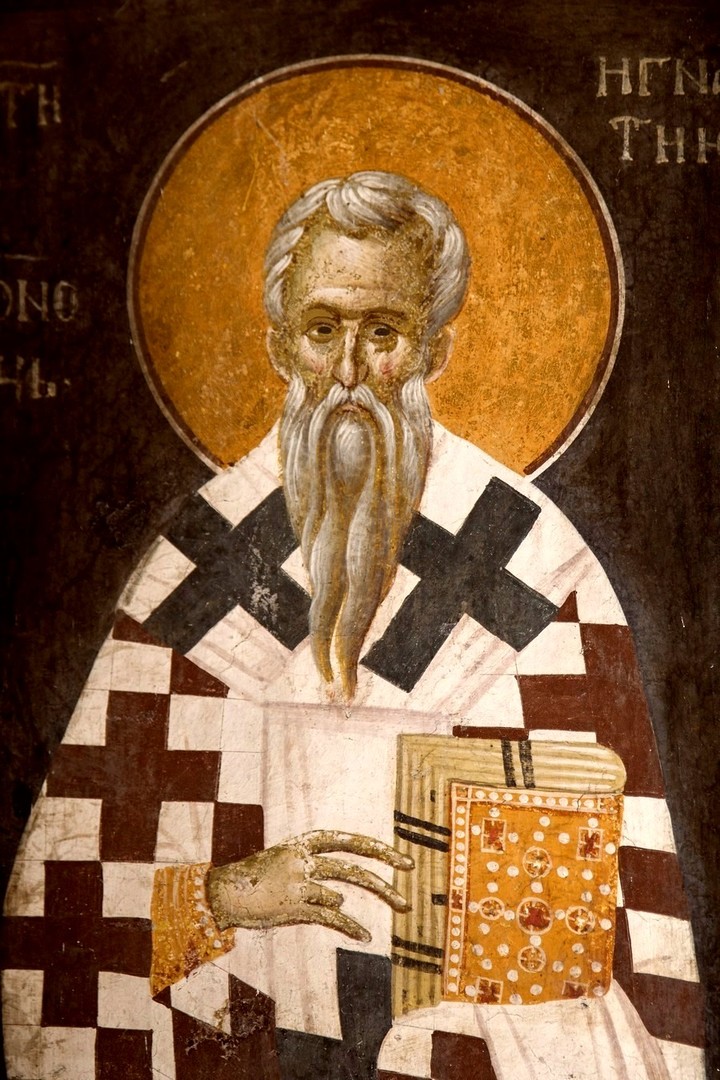
According to tradition, Ignatius was probably a toddler around the time Jesus died, knew Peter as a young man, and was later a disciple of John. This is not a medieval Catholic writing after centuries of change could have corrupted the church. He is writing less than 20 years after the last apostle died, and his ideas are echoed by other church leaders of that century. I believe such an early development of the roles of bishops, presbyters, and deacons was fully part of the apostolic teaching; otherwise, Jesus’ emissaries were complete failures, unworthy of our attention.
The term presbyter literally means “elder,” but it is the root of our modern word “priest.” Some Christians will argue that “There is no priesthood now, because the Bible says we are all priests.” They are different words: The church leader—the “elder” or “priest”—is a presbuteros or presbyter. When all Christians are called a royal or holy priesthood (e.g., 1 Peter 2:9; Revelation 1:6), a different word is used: hiereus. All Christians should be priests in the sense of hiereus. Only a few are priest/elders in the presbuteros sense. Perhaps fewer still are willing to accept the spiritual responsibility that goes with the privilege of being a hiereus. We will look at that in a forthcoming article.
Since Paul’s list of qualifications in 1 Timothy 3 mentions only overseers/bishops and deacons, many scholars believe the distinction between overseers/bishops and elders/priests probably developed some time after Paul wrote that letter. So, we can look at 1 Timothy 3:1–7 as qualifications for a pastor or other church leader with high responsibility.
Most of those qualifications appear, or are reworded, in the description of a deacon or female leader (either a deaconess, deacon’s wife, or some other female leader within the church) in verses 8–13. They are qualities that all Christians should either have or pursue. We should be above reproach, faithful to our spouses (if married), sober-minded, self-controlled, respectable, hospitable, not violent but gentle, not quarrelsome, and not greedy. We should manage our households well. We should pursue spiritual maturity. Finally, we should make every effort to gain a positive reputation with those outside the church as well as within it.
But one distinction stands out. He must be “able to teach,” according to verse 2. Not all Christians are called to teach. We should make every effort to learn the Bible and know the truths of our faith, but we may have other gifts and talents to share to build up the body of Christ and His kingdom. Also, we should know the Gospel and our own testimony well enough to be able to share the good news about Jesus Christ with others.
Next time, we will look at 1 Timothy 3:8–13, compare it with these seven verses, and see how the qualifications for church leaders are essentially a portrait of a mature man or woman of God.
Previous article in this series.
Copyright © 2026 Michael E. Lynch. All rights reserved.


One response to “Men and Women of God: VIII. Bishops and Priests and Deacons, Oh My!”
[…] Next article in this series. […]
LikeLike